
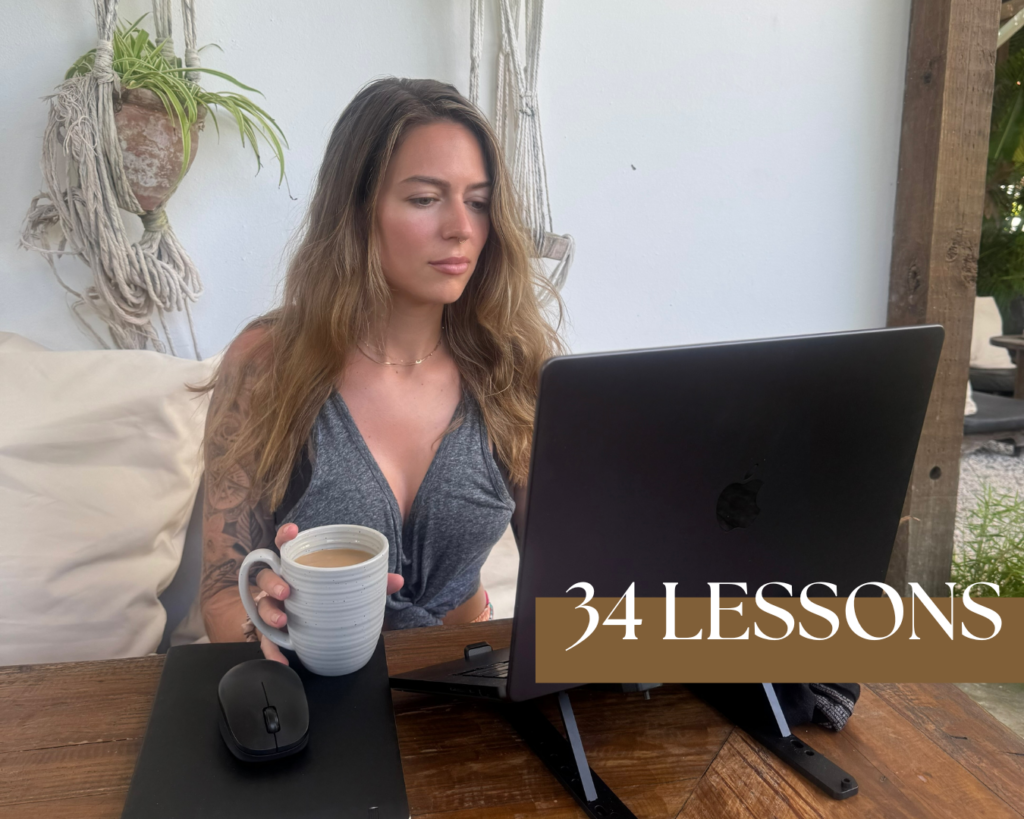
34 Lessons It Took Me 34 Years to Learn
34 Lessons That Took me 34 Years to Learn January 7, 2026 This past Sunday, January 4th, I turned 34 after what felt like a blur of the previous year. One thing I’ve always liked about having a birthday in early January is that it gives me a natural pause and the opportunity to reflect twice: once on the year we all just finished, and once on the personal year that shaped me more quietly, behind the scenes. I don’t think wisdom arrives all at once. It comes in pieces—through repetition, through mistakes, and through finally being honest with yourself about what is and is not working anymore. As I looked back, I started noticing patterns and this ended up making me realize my own growth journey started a decade ago after my mother died. And while that set everything in motion, the last five years have been especially formative. Without further ado, here are the 34 that stood out to me, in no particular order, and broken up with some of my favorite photos I’ve taken over the last year: 1. Peace is a better metric than productivity. For a long, long time I measured my days (and inadvertently my worth) by how much I got done. I think many people can resonate with this, especially if you are participating in the U.S. work culture. I see a lot of people talking about working sun up to sun down like it’s a flex, or if you want success you must “hustle harder.” If I was busy, I felt successful. If I slowed down, I felt behind. Eventually I noticed something uncomfortable: the most productive seasons of my life weren’t always the healthiest ones. Does this also ring true for you? What actually started to shift things was paying attention to how I felt at the end of the day. Calm. Regulated. Present. Or wired, depleted, and already bracing for tomorrow. Productivity stopped feeling like a useful scoreboard once I realized how often it came at the expense of peace. 2. Consistency always beats intensity, especially when life gets busy. I used to believed that progress came from going all in. Big plans. Big effort. Bigger energy. if I could just commit harder, train harder, work longer, push more… everything would eventually fall into place. But life doesn’t really cooperate with that approach. Travel, stress, grief, work, relationships—something is always shifting. Every time my routine got disrupted, I’d feel like I had to start over, which was exhausting. What finally changed this was focusing on what I could return to no matter what. Shorter workouts. Fewer non-negotiables. Systems that could flex instead of collapse the moment life got full. I stopped trying for a perfect execution and instead started staying in the relationship with the habit, even when it looked different than planned. 3. Not everyone who is a part of your story is meant to be a part of your story forever. Admittedly, I still struggle with this one, but I am aware of it and actively working on it. I used to equate longevity with loyalty. If someone had been in my life for a long time, I felt a responsibility to keep them in it, even when the relationship no longer felt aligned. However, relationships have seasons, just like everything else. Some people are meant to walk with you through certain chapters, teach you something important, or reflect a version of yourself that you needed at the time. That doesn’t mean they’re meant to come with you into every next phase. Letting go doesn’t have to happen dramatically. Sometimes it can look like creating more space, allowing less access, or giving fewer explanations. This shift helped me release relationships without villainizing anyone, including myself. 4. You don’t need to earn rest. For most of my life, rest felt conditional. Something you got after you finished everything on the list. After you worked hard enough. After you proved you deserved it. Rest was the reward, not the baseline. The problem with this logic is that the list never actually ends. There’s always something else to do, something more you could be doing (right?). Rest is a requirement for functioning well. Especially if you’re someone who carries a lot of responsibility or tends to be high-capacity. Waiting until burnout to slow down is self neglect, not discipline as it’s often sold. Right now, my rest looks like honoring slow mornings and having a dead stop time for work, even though realistically I could work through the night every night and not run out of projects to do. 5. Resting before you’re exhausted is a skill worth learning. Initially when I first accepted that rest was necessary, I still tended to wait too long. I’d push until I was depleted, irritable, or getting sick and then I’d slow down. Rest became reactive instead of preventative. I had to learn how to notice early signals. Subtle fatigue. Shorter patience. The sense that everything felt just a bit heavier than usual. Those signs were easy to ignore, especially when I was used to powering through. Resting felt indulgent at first. Like I was stopping too soon. But over time, I noticed that doing so kept me more regulated, more consistent, allowed for more creativity, and I was less likely to spiral into full burnout. 6. Having a high capacity doesn’t mean being endlessly available. High capacity used to feel like a compliment, and I treated it like a responsibility. Because I could handle a lot, I often did. More work. More emotional labor. More availability, including tending to work inquiries over the weekend. I literally had zero days where I wouldn’t not work. What I didn’t realize at first was how often my capacity was being confused with obligation, sometimes by others, but often by me. I said yes because I could. I stayed accessible because it felt easier than disappointing someone. And then slowly, my own needs started coming last. No