Author name: LISAWISHMANN

34 Lessons Blog Post
Uncategorized

34 Lessons It Took Me 34 Years to Learn

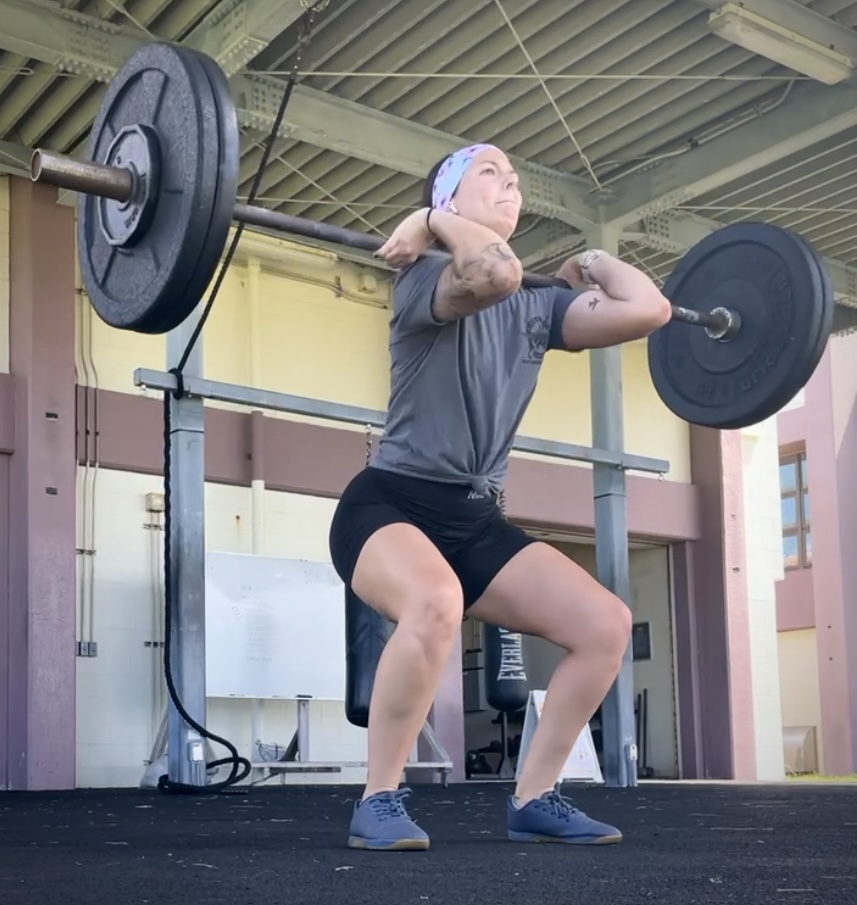
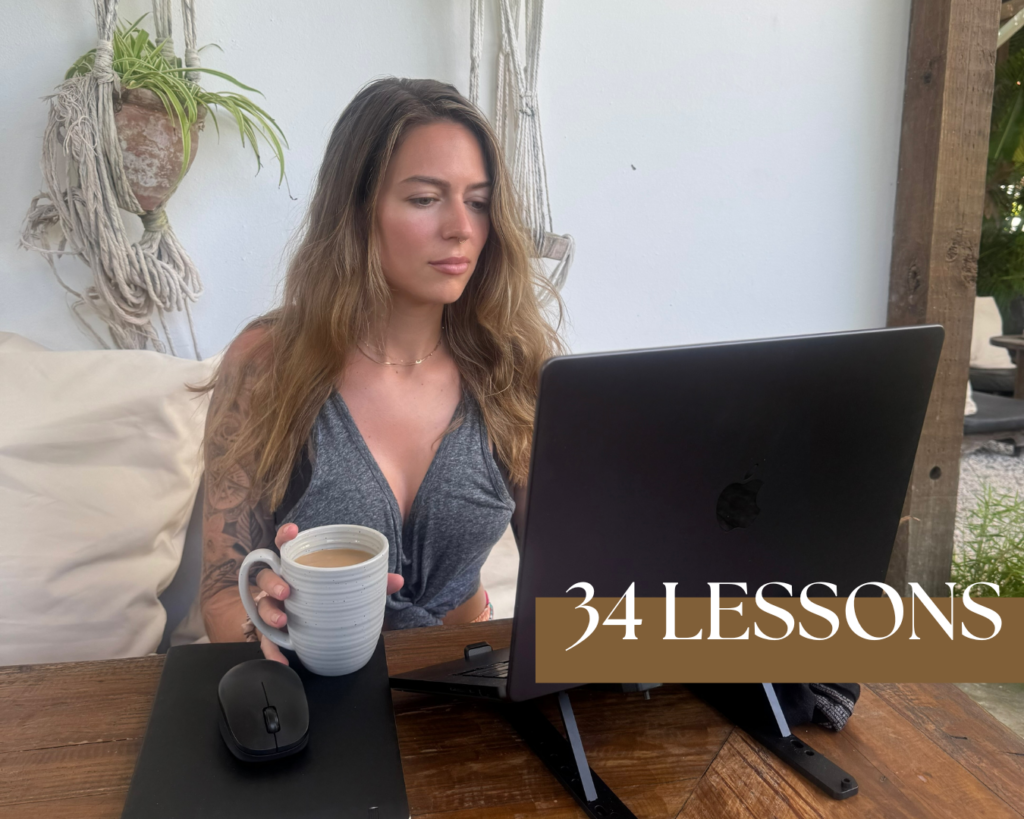
34 Lessons That Took me 34 Years to Learn January 7, 2026 This past Sunday, January 4th, I turned 34 after what felt like a blur of the previous year.  One thing I’ve always liked about having a birthday in early January is that it gives me a natural pause and the opportunity to reflect twice: once on the year we all just finished, and once on the personal year that shaped me more quietly, behind the scenes. I don’t think wisdom arrives all at once. It comes in pieces—through repetition, through mistakes, and through finally being honest with yourself about what is and is not working anymore. As I looked back, I started noticing patterns and this ended up making me realize my own growth journey started a decade ago after my mother died. And while that set everything in motion, the last five years have been especially formative. Without further ado, here are the 34 that stood out to me, in no particular order, and broken up with some of my favorite photos I’ve taken over the last year: 1. Peace is a better metric than productivity. For a long, long time I measured my days (and inadvertently my worth) by how much I got done. I think many people can resonate with this, especially if you are participating in the U.S. work culture. I see a lot of people talking about working sun up to sun down like it’s a flex, or if you want success you must “hustle harder.” If I was busy, I felt successful. If I slowed down, I felt behind. Eventually I noticed something uncomfortable: the most productive seasons of my life weren’t always the healthiest ones. Does this also ring true for you? What actually started to shift things was paying attention to how I felt at the end of the day. Calm. Regulated. Present. Or wired, depleted, and already bracing for tomorrow. Productivity stopped feeling like a useful scoreboard once I realized how often it came at the expense of peace. 2. Consistency always beats intensity, especially when life gets busy. I used to believed that progress came from going all in. Big plans. Big effort. Bigger energy. if I could just commit harder, train harder, work longer, push more… everything would eventually fall into place. But life doesn’t really cooperate with that approach. Travel, stress, grief, work, relationships—something is always shifting. Every time my routine got disrupted, I’d feel like I had to start over, which was exhausting. What finally changed this was focusing on what I could return to no matter what. Shorter workouts. Fewer non-negotiables. Systems that could flex instead of collapse the moment life got full. I stopped trying for a perfect execution and instead started staying in the relationship with the habit, even when it looked different than planned. 3. Not everyone who is a part of your story is meant to be a part of your story forever. Admittedly, I still struggle with this one, but I am aware of it and actively working on it. I used to equate longevity with loyalty. If someone had been in my life for a long time, I felt a responsibility to keep them in it, even when the relationship no longer felt aligned. However, relationships have seasons, just like everything else. Some people are meant to walk with you through certain chapters, teach you something important, or reflect a version of yourself that you needed at the time. That doesn’t mean they’re meant to come with you into every next phase. Letting go doesn’t have to happen dramatically. Sometimes it can look like creating more space, allowing less access, or giving fewer explanations. This shift helped me release relationships without villainizing anyone, including myself. 4. You don’t need to earn rest. For most of my life, rest felt conditional. Something you got after you finished everything on the list. After you worked hard enough. After you proved you deserved it. Rest was the reward, not the baseline. The problem with this logic is that the list never actually ends. There’s always something else to do, something more you could be doing (right?). Rest is a requirement for functioning well. Especially if you’re someone who carries a lot of responsibility or tends to be high-capacity. Waiting until burnout to slow down is self neglect, not discipline as it’s often sold. Right now, my rest looks like honoring slow mornings and having a dead stop time for work, even though realistically I could work through the night every night and not run out of projects to do. 5. Resting before you’re exhausted is a skill worth learning. Initially when I first accepted that rest was necessary, I still tended to wait too long. I’d push until I was depleted, irritable, or getting sick and then I’d slow down. Rest became reactive instead of preventative. I had to learn how to notice early signals. Subtle fatigue. Shorter patience. The sense that everything felt just a bit heavier than usual. Those signs were easy to ignore, especially when I was used to powering through. Resting felt indulgent at first. Like I was stopping too soon. But over time, I noticed that doing so kept me more regulated, more consistent, allowed for more creativity, and I was less likely to spiral into full burnout. 6. Having a high capacity doesn’t mean being endlessly available. High capacity used to feel like a compliment, and I treated it like a responsibility. Because I could handle a lot, I often did. More work. More emotional labor. More availability, including tending to work inquiries over the weekend. I literally had zero days where I wouldn’t not work. What I didn’t realize at first was how often my capacity was being confused with obligation, sometimes by others, but often by me. I said yes because I could. I stayed accessible because it felt easier than disappointing someone. And then slowly, my own needs started coming last. No

Metabolism Blog Post
Training Tips & Strategy

What Really Happens to Your Metabolism After 30

What Really Happens to Your Metabolism After 30? (It’s Not What You Might Think!) May 9, 2025 Think Your Metabolism Suddenly Started to Decline After 30? Think Again. Most people blame any weight gain in their 30s and 40s on a “slowed” metabolism. Hate to break it to you, but this isn’t it. A study has found that metabolism doesn’t significantly decline until after age 60. So, if it’s not your biology, what gives? What happens to your metabolism? What the Research Actually Shows A massive 2021 study published in Science by Duke University and international collaborators analyzed data from over 6,400 individuals across 29 countries, ranging in age from 8 days to 95 years. Researchers measured total energy expenditure in real-world settings and were able to accurately assess how human metabolism changes across the lifespan. Here’s a quick overview of what they found: From birth to age 1, your metabolic rate skyrockets. Infants burn calories at a rate nearly 50% higher than adults when adjusted for body size. This is the highest rate of metabolism you’ll experience in your entire life. From age 1 to around 20, metabolism gradually declines. Contrary to the belief that teens have “unbeatable” metabolisms, it’s actually a downward slope from infancy, though it is still relatively high due to growth and high activity levels. From age 20 to 60, total energy expenditure holds remarkably steady. When adjusted for fat-free mass (lean mass), there’s no significant decline in metabolism during these decades, even through pregnancy, menopause, and middle age. Yep. After age 60, metabolism begins to gradually decline at a rate of about 0.7% per year, primarily due to the loss of lean body mass and organ function. This research overturns decades of assumptions that your metabolic rate begins dropping in your 30s or 40s, especially for women. Instead, it points to changes in lifestyle, movement, and body composition as the real culprits behind slowed fat loss or weight gain in adulthood. So if you’ve said that , “I hit 30 and everything changed,” what’s really happening is not a metabolic cliff, but a quiet accumulation of habit shifts.  Let’s breakdown what’s really going on, starting with TDEE. What Is TDEE?   TDEE stands for Total Daily Energy Expenditure. It’s the total amount of energy (calories) your body burns in a day. TDEE has four components: 1. Basal Metabolic Rate (BMR)The number of calories your body needs to maintain basic functions like breathing, cellular repair, and keeping your organs functioning. This makes up the largest portion of your TDEE. around 60 to 70 percent 2. Non-Exercise Activity Thermogenesis (NEAT)This includes all the little movements you do during the day: walking, cleaning, fidgeting, cooking, playing with your kids. NEAT can vary dramatically from person to person and plays a significant role in energy balance. 3. Thermic Effect of Food (TEF)Your body uses energy to digest, absorb, and process all of the food you eat. Protein has the highest thermic effect. So all of that talk about consuming more protein? It’s more than adding lean mass because higher protein meals will increase your TDEE. 4. Exercise Activity Thermogenesis (EAT)This is what you burn during traditional, intentional workouts. Contrary to popular belief, this makes up the smallest slice of the TDEE pie for most people, at around 5 to 10 percent. So, What Changes in Your 30s and 40s? Your metabolism didn’t “crash” at 30, but your lifestyle likely did change in small, compounding ways. Think back to when you were younger… You were constantly on the move: walking to class across campus, lugging around a backpack, meeting up with friends, riding your bike, playing a school or club sport, or even just fidgeting while studying. Movement was built into your day without thinking about it, even if you weren’t working out. Then came full-time work. Now you spend most of your day sitting at a desk, in your car, during meetings. Add a growing list of responsibilities: a demanding job, family schedules, household logistics. Your time is limited, energy is split, and convenience takes over.  So, you reach for the quickest food options, skip meals, or eat while multitasking. This food is usually higher in refined carbs and fats. You sleep less, stress more, and workouts start slipping through the cracks.  Let’s compare this to the four components of TDEE: BMR: remains stable through your 30s and 40s unless there’s significant muscle loss NEAT: declines because you sit more and are less active overall TEF: may drop if your diet shifts toward ultra-processed, or quick meals low in protein and fiber EAT: becomes inconsistent due to stress, fatigue, or lack of energy You feel off. Your body changes and you feel stuck. So, you decide to “get back on track.” And what do you reach for? The same workouts, meal plans, or habits that worked in your 20s. Except… your life looks nothing like it did then. That’s where the disconnect comes up for most people. It’s not that your body is broken or a switch has flipped, the old strategies no longer match your current reality. The good news?
You can improve it. How to Improve Your TDEE (Without Burning Out) Here’s how to support and improve each piece of the TDEE puzzle: 1. Support BMR by Building and Maintaining MuscleMuscle is metabolically active tissue. Strength training and protein intake help you retain lean mass as you age. This alone can make a noticeable difference in how your body feels and functions. You can read more about that for women, here. 2. Increase NEAT by Adding More Movement into Your Daily LifeTake phone calls standing. Walk after each meal. Carry your groceries to a parking spot further away from the door. Stretch during TV time. Increase your step count. While 8-10k steps per day are optimal, if you’re sedentary, start out with adding 1-2k more. 3. Boost TEF by Prioritizing ProteinNo, you’re not going to stop hearing about protein any time soon. Aim for at least 25 to 30 grams

Sauce Recipe Blog Post
Nutrition & Meal Prep, Recipes

The Secret’s in the Sauce (and These Four Slap)

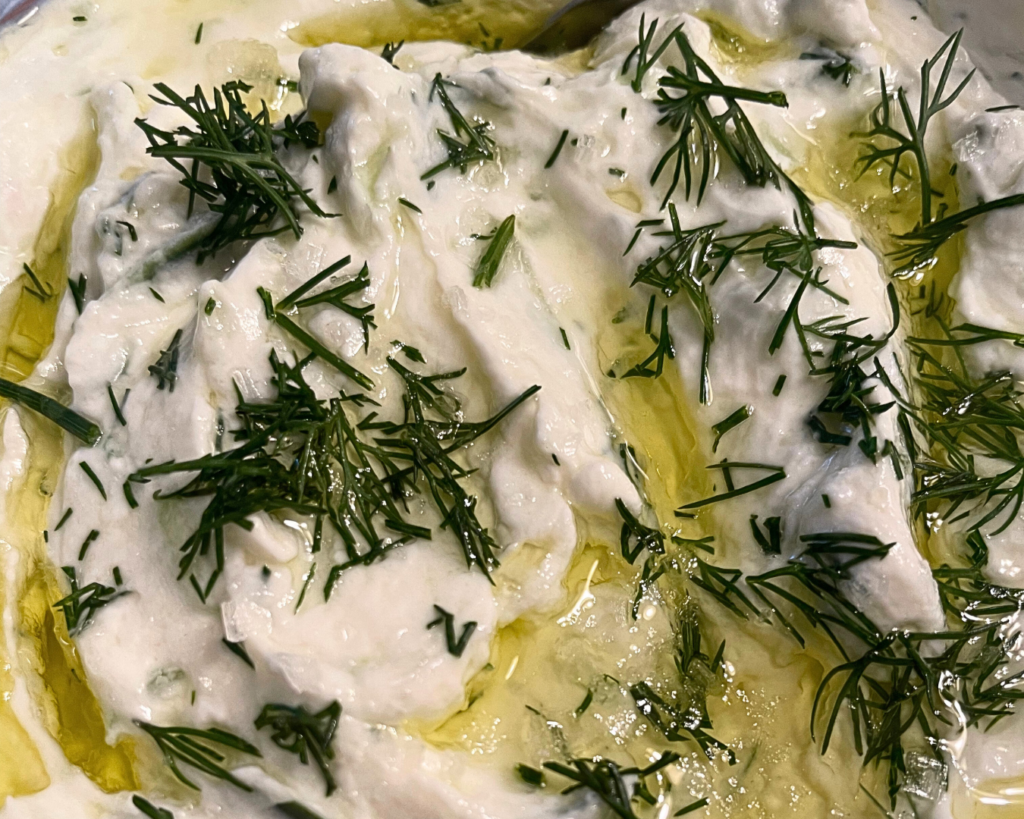
The Secret’s In the Sauce (and These Four Slap!) May 2, 2025 Ready to take your meals from basic to bold? Start with the sauce. I’m sharing four of my favorite go-to homemade sauces: tzatziki, chimichurri, salsa verde, and a simple homemade mayo. Each one is packed with flavor, made with fresh ingredients, and comes together quickly in your kitchen. And these sauces are so good they slap! Whether you’re meal prepping, assembling protein bowls, or just trying to eat healthier without sacrificing taste, these sauces are game-changers. Once you try them, store-bought will never be the same. Did I mention they take minimal time to make? Tzatziki Ingredients 12 oz full fat greek yogurt1 lemonflaky sea salt, to tastecrushed black pepper, to tastefresh dill weed2 garlic cloves 1 english cucumber extra virgin olive oil Directions Juice and zest your lemon. Grate garlic cloves. Chop your dill. Mix together greek yogurt, lemon juice, lemon zest, salt, pepper, garlic, and dill. Set aside. Grate cucumber (with the skin on). Squeeze excess water out of cucumber with a cheesecloth, clean kitchen towel, or paper towel. Discard cucumber water. Incorporate grated cucumber into yogurt mixture. Add olive oil to taste & serve immediately. Or hold off on olive oil if you plan to store in the fridge. Note: You may substitute garlic powder for chopped garlic if you do not have fresh garlic on hand. Chimichurri Ingredients 1 bunch cilantro1 bunch flat leaf parsley 4 cloves garlichalf yellow onionitalian seasoning blendsalt + pepper, to tastecrushed red pepper flakes splash of red wine vinegarextra virgin olive oil Directions Dice the garlic, chop the onion, and add these plus a splash of olive oil, vinegar, and the seasonings into a bowl to aerate. Set aside. Remove stems from cilantro and parsley. Rough chop and combine. Mix everything together in a large bowl. Slowing stir in more olive oil until desired consistency. Taste for saltiness and acidity, and add more salt and/or vinegar if desired. Note: Over-processing in a food processor can lead to bitterness from the breakdown of the cilantro and parsley. Best option is to hand chop and combine all ingredients without a blender. Salsa Verde Ingredients 2 lbs fresh tomatillos, leaves pulled & rinsed to remove stickiness + residue 2-3 serrano peppers*6 cloves garlichalf large white onion1 bunch cilantrosea salt *depending on heat tolerance Directions Placed rinsed, whole tomatillos, whole serranos, and halved onion on a baking sheet under the broiler in your oven until skins begin to char and blister, 3-5 minutes. Rotate once and place back under broiler for another 3-5 minutes. Remove and let cool completely to room temperature. Chop onion and garlic cloves. Remove stems from cilantro bunch. Place tomatillos, serrano peppers, onion, garlic, and cilantro in a food processor. Slowly pulse until desired consistency. Salt to taste. Notes: You may substitute jalapeño peppers for less heat. Char veg over an open flame if possible! The Best Homemade Mayo Ingredients 1 large egg (room temperature)1 tablespoon Dijon mustard1 tablespoon fresh lemon juice (or white wine vinegar)1 cup (240 mL) avocado oil½ teaspoon fine sea salt optional adds: 1 small garlic clove (for aioli-style mayo), pinch of ground black pepper Directions In a tall, narrow jar or glass that fits your immersion blender, add the egg, mustard, lemon juice, and salt. Pour the oil on top. Let the mixture settle for 10–15 seconds. Place the immersion blender at the bottom of the jar. Start blending on high speed without moving the blender for about 10 seconds. Once the mixture at the bottom begins to emulsify and turn creamy, slowly lift the blender upward to incorporate the remaining oil. Taste and adjust seasoning with additional salt or lemon juice if needed. For a tangier flavor, add a bit more lemon juice or vinegar. Transfer the mayonnaise to a clean, airtight container. Refrigerate and use within 1–2 weeks. These sauces are a simple way to add flavor, freshness, and variety to your plate. Once you get the hang of making them at home, you’ll wonder how you ever went without. Got a favorite? Let me know in the comments—or tag me on Instagram @lisawishmann if you try one out. I’d love to see how you make it your own! Get the Drip: Sauce FAQs You Didn’t Know You Needed What do I eat each of these with? Tzatziki: Perfect with grilled chicken, lamb meatballs, pita, mediterranean bowls, or roasted veggies. Also great as a dip for raw veg or a dollop on top of potatoes. Chimichurri: A classic with grilled steak, but also amazing on chicken, shrimp, eggs, or roasted sweet potatoes. Salsa Verde: Use it on tacos, fish, grilled veg, or as a zesty salad dressing. It adds a bright punch to anything savory… and obviously chips & salsa 🙂 Homemade Mayo: Use as a base for creamy dressings, aioli, or sandwich spreads. It’s also great in tuna or egg salad, and is essential on burger patties. How long will these last in my fridge? Most homemade sauces last 4–7 days in an airtight container in the fridge. Oil- and vinegar-based sauces like chimichurri may last a bit longer (up to 10 days), while dairy-based ones like tzatziki should be used within 4–5 days. If it looks, smells, and tastes fine, it’s probably fine. Can I make these ahead of time and freeze them? Half yes! Chimichurri and salsa verde freeze well in small portions (like an ice cube tray). Mayo and tzatziki don’t freeze well due to their creamy bases. They’ll separate when thawed. What if my mayo doesn’t emulsify? Make sure all ingredients are at room temperature, especially the egg and oil. Blend slowly and steadily as rushing can cause separation. If it breaks, you can slowly whisk it into a fresh egg yolk to rescue it. More Posts Like This No posts found!

Reality Behind Coaching Blog Post
Training Tips & Strategy

Why Coaching Works When Programs Alone Don’t: The Reality Behind Coaching

Why Coaching Works When Programs Alone Don’t: The Reality Behind Coaching April 30, 2025 Why You Don’t Need Another Program—You Need a Coach You’ve downloaded the free workouts.You’ve tried the macro calculators.You’ve told yourself this time will be different. But it still doesn’t stick. Maybe you made progress, but as soon as life get’s busy you fall off track, again. It’s not because you’re lazy or undisciplined. It’s because most training programs aren’t designed for you they’re designed for the masses. AND. Even if a program is designed for you, but no one takes the time to talk about your personal challenges or obstacles when it comes to fitness, your custom program won’t stick either. This is where coaching comes in. Let’s Clear Something Up: What Is Coaching, Really? The word coach gets thrown around a lot these days and there are more coaches than ever. While plenty of people use the title, not everyone is actually coaching in practice. There’s a difference between coaching, consulting, and mentoring. Let’s review: Coaching is a partnership. It’s a collaborative process that helps you discover the best path forward based on your life, your priorities, and your capacity. The actual definition from the ICF: “coaching is partnering with clients in a thought-provoking and creative process that inspires them to maximize their potential.” Consulting provides expert recommendations. A consultant has an agenda and will likely tell you what to do based on his or her own knowledge, experience, and intuition. Mentoring is based on personal experience. A mentor will share what worked for them in hopes it helps you, too. Within my own practice, I do a blend of coaching and consulting because real transformation requires both insight and implementation. What Coaching Is (and How It Actually Helps You Stay Consistent) 1. A Thought PartnershipI don’t just hand you a plan. I help you understand what’s realistic, where you’re stuck, and how to move forward. Together. Even if you are an Essential Coaching client, which is my lowest touch offering, I will still connect with you monthly or as needed to see if you are stuck and/or where you need help. 2. A Safe Space for ChangeWe work on mindset. We challenge old patterns. We create routines that align with your actual life, not an idealized version of it. We work through the real barriers: stress, burnout, perfectionism. All of this occurs in a space of non-judgment where you get to be honest and open. 3. A Sustainable SystemYou won’t be just checking boxes. You’re going to build habits and learn how to stick with them, without burning out, and while life gets crazy because we both know it will. What Coaching Is Not (and Why Most Programs Miss the Mark) 1. Just a Training ProgramThere’s no value in a plan you can’t stick with. Change will not come from a plan you can’t stick with. Coaching adapts to you, your stress levels, your schedule, your goals. While yes, you will get a training program, we will work together to make sure you’re actually doing it. 2. A Quick FixThis isn’t about 30-day challenges, 75-Hard, or cutting carbs summer because summer is around the corner. Coaching is about the long game. If you stop with chasing aggressive solutions because you have an upcoming deadline and instead focus on the long game, you will stop yo-yoing with your fitness. 3. One-Size-Fits-AllYou’re not a template, and your solution shouldn’t be either. If You’ve Tried a Bunch of Training Programs and They Haven’t Worked for You… You’re not the problem. The problem is that you’ve been trying to fit your life around someone else’s solution. A generic program bought without any insight into your schedule, goals, challenges, or knowledge of common thoughts that swirl around in your head. Coaching flips that on its head. We build a plan around your life so you can show up, stay consistent, and get stronger without the mental gymnastics or feelings of defeat. Inside StrongHER: Fitness Coaching for Women Who Want More Than a Program StrongHER is my 8-week women’s coaching cohort that combines strength training, nutrition education & personalized coaching, sustainable habit support, and real-life implementation. You’ll get: a semi-custom training plan that fits your schedule and environment (home or gym) a personalized nutrition plan based on your goals and what you like to eat support with the things that repeatedly get in the way (time, stress, self-doubt, family schedules) weekly guidance, group coaching calls, education, and community We officially begin May 7. Enrollment is open now, but spots are limited! Want to learn more? Visit the StrongHER webpage here. More Posts Like This No posts found!

Why Women Need More Muscle Blog Post
Training Tips & Strategy

The Truth About Why Women Need More Muscle: Strength, Metabolism, Longevity

The Truth About Why Women Need More Muscle: Strength, Metabolism, & Longevity April 25, 2025 Muscle plays a critical role in metabolic health and disease prevention. It’s 2025 and yet I still encounter many women who avoid strength training, fearing it will make them appear less feminine and more bulky. Or, if they do weight lift it’s the focus is on light DBs and no intensity or grit. The truth about why women need more muscle? Building muscle enhances your metabolism, supports hormone balance, and promotes longevity …and yes, of course, it makes you strong and sexy, too. Muscle is the body’s largest endocrine organ, and plays a crucial role in metabolic health and disease prevention. Let’s deep dive into some information backed by data that suggests without argument that anyone and everyone should pursue strength training. If you are a woman who is reading this, yes, women need more muscle, including you. If you’re not a woman, please share this with the most important women in your life. Strength Makes Life Easier Bold yet truthful statement: When you are stronger, everything in life is easier. From carrying groceries and moving furniture, to playing with your kids and staying independent as you age… strength gives you freedom. Women need more muscle because it builds physical resilience, protects your joints, improves posture, and boosts daily energy. Strength doesn’t just change your physique or make your workouts easier, it changes how you move through your entire life with more ease, confidence, and capability. More Muscle Means Better Metabolism First, let’s breakdown Resting Metabolic Rate (RMR): Your RMR is the amount of energy (calories) your body uses at rest to maintain basic functions like breathing, circulation, and digestion. RMR accounts for roughly 60–75% of your total daily energy expenditure (TDEE). Why is RMR important? Knowing your RMR helps you accurately estimate how many calories you need to maintain, lose, or gain weight. A very low RMR can sometimes signal issues like hormonal imbalances, under-eating, or chronic stress.  Factors that influence RMR include age, sex, genetics, nutrition, sleep, stress, and exercise and lean muscle mass. Muscle tissue is more metabolically active than fat. This means protecting and building muscle helps support a higher RMR over time, helping to combat the natural decline in metabolism that comes with age. Strength training done correctly increases lean body mass. The more muscle you have, the more calories your body burns at rest, making it easier to maintain your physique, support metabolic health, and protect against weight regain. Higher muscle mass also improves insulin sensitivity, making it easier for the body to regulate blood sugar. Strength training has been shown to reduce visceral fat, which is the type of fat stored around internal organs that is most closely linked to disease risk (1). Quick Note: While often used interchangeably, Basal Metabolic Rate (BMR) and Resting Metabolic Rate (RMR) are not the same. BMR measures the minimum energy your body needs to perform essential functions in a completely rested, fasted state. RMR measures the energy burned at rest in more practical, real-world conditions, including light digestion or minimal movement. RMR is generally the more useful number when planning your nutrition and training. Muscle Enhances Hormonal Health Strength training plays an important role in supporting hormone function, especially as women transition through different life stages, particularly during phases like perimenopause and menopause when estrogen levels decline.  This decline in estrogen can lead to changes in body composition including decreased lean muscle mass, increased fat storage, decreased bone density, and a slower metabolism. These hormonal changes can also contribute to symptoms such as fatigue, mood disturbances, disrupted sleep, and an increased risk of insulin resistance. The time to focus on strength training as a woman to support your hormones later in life? Your 20s and 30s. It’s never too late to start, but the best time to incorporate strength training into your life if you haven’t already is… today. Here’s how strength training supports better hormonal health in women: Muscle mass improves insulin sensitivity, which helps regulate blood sugar levels and reduce fat storage. Resistance training stimulates growth hormone and IGF-1. Two hormones that aid in muscle growth, tissue repair, and fat metabolism. Regular strength training workouts can help lower chronic stress, thus reducing its negative impact on body composition. By preserving muscle mass, you also protect bone density, reducing the risk of osteoporosis and fractures later in life. Research shows that women who prioritize strength training during midlife maintain better body composition, stronger bones, and a healthier metabolism compared to those who rely only on cardiovascular endurance exercise or dieting alone (2). Muscle Promotes Longevity Maintaining lean muscle on your body isn’t only important for aesthetics as you age, but it also plays an important role in how well you age. Low skeletal muscle mass, sarcopenia, is strongly associated with higher rates of chronic disease, functional decline, and early mortality (3). Muscle acts as a reserve and protector of your metabolic health, mobility, and independence as you get older. Here are five ways increased muscle promotes longevity, and are hopefully the last examples to help convince you to either 1) stick with the routine you have 2) starting a strength training program ASAP: 1. Strong muscles allow you to perform daily activities (walking, climbing stairs, lifting groceries) without assistance. The stronger you are, the longer you will be able to be independent in life. 2. Maintaining muscle mass improves balance, stability, and joint integrity, lowering the risk of serious injuries like hip fractures. 3. Increased muscle helps the body manage blood sugar, cholesterol, and inflammation. These are all factors in preventing heart disease, diabetes, and age-related cognitive decline.  4. Muscle serves as a reserve of amino acids, which are crucial for immune system repair and response during illness or injury. 5. More muscle mass is linked to better recovery outcomes after surgeries, hospitalizations, and periods of illness. Women with greater relative muscle mass have a significantly lower risk of developing

5 Signs You're Making Progress Blog Post
Training Tips & Strategy

How to Tell if Your Workout Plan Is Working: 5 Signs You’re Making Progress

How to Tell if Your Workout Plan is Working:5 Signs You’re Making Progress April 25, 2025 5 Signs Your Workout Plan Is Working …beyond the scale. If you’ve ever wondered how to tell if your workout plan is working, you’re not alone. Many people commit to a training plan but aren’t sure what real progress looks like, especially beyond the scale. In fact, the scale might not move at all in the beginning. Maybe it does move, but nearly not as much as you anticipated. You might not feel sore. So how do you actually know if your fitness program is effective? Up next, I  break down 5 clear signs your training is working the beyond your weight, how much you sweat, or soreness. Whether you’re a seasoned lifter following a strength training program, just getting back into a routine after time off, or are a complete beginner these indicators will help you measure workout progress the right way. 1. You’re Getting Stronger: A Clear Sign Your Workout Plan Is Working If you are on a training program, it is likely you are tracking sets, reps, workout history, etc. (and if you’re not, you absolutely should be, but that’s a conversation for a different post). Signs you are getting stronger include: you can lift heavier weight than when you started, you can do more reps with the same weight, movements that once felt hard now feel easier, and you can maintain better control through a full range of motion. Additionally, if you’ve had to do any exercise with assistance, you might need less added resistance for movements  like pull-ups or dips. 2. Your Performance is Improving Improved performance is equally as important as improved strength when measuring progress. The work performance is broad and all-encompassing, but specific examples that demonstrate your progress include: You complete workouts faster or with better pacing. Your endurance during circuits or conditioning has increased. You notice you are out of breath less. You can maintain higher levels of effort during your session without burning out. You recover quicker between training sessions. Not only should you be able to push harder, when you do, your breathing and heart rate will return to baseline faster. 3. You’ve Built a Routine (& are Consistent) This one is often overlooked as a measurement of progress. Myself and many other fitness professionals hammer this because it is so critical to your success. You can have the best intentions and the best training plan, but if you don’t stick with it none of that matters.  Things that you should take note of include if you’ve followed the same program for 8–12+ weeks, you rarely miss planned workouts, you resist the urge to jump from plan to plan, and you prioritize tracking your sessions. Consistency should also be measured against how much you rest and recover, not just how frequently you train. Remember, the adaptations that lead to progress happen outside of the gym, during your recovery period! 4. You Feel Better Day to Day Hopefully one of reasons you workout is to feel better. We all want more energy, a more stable mood, and a clearer mind. You may notice you feel better with a consistent routine if… You sleep deeper and wake up feeling more rested.Your energy levels are more stable throughout the day.Your mood is more even and less reactive day to day.You experience fewer aches, pains, or nagging injuries.Your digestion and appetite regulation improve. 5. Body Changes Without the Scale: Proof Your Training Plan Is Paying Off Better fitting clothes is the classic non-scale victory and for good reason. When your clothes fit better you’ll be more confident. When your confidence improves it seems like everything else around you improves. Aside from the obvious that your jeans or pants feel looser in the waist, or your shirts fit better across your shoulders or arms, non-scale clothes fit differently markers of progress are: You notice better muscle tone in the mirror. Areas that used to feel “soft” feel firmer. You feel stronger and more confident in your clothes. You may experience these changes in your body even if the scale doesn’t move much or stays the same. Strength, performance, consistency, recovery, and body composition tell a clearer story. If you feel like you’ve been doing all of the right things, but you’re not seeing these signs yet… You might not need to train harder, just smarter. I can help you with that. Check out my available programs designed to help you build strength and see real progress. If you want to learn more about how I can help you, schedule your free discovery call here. More Posts Like This No posts found!

Chia Seed Recipe Blog Post
Nutrition & Meal Prep, Recipes

4 Easy Chia Seed Pudding Recipes for Meal Prep and Gut Health

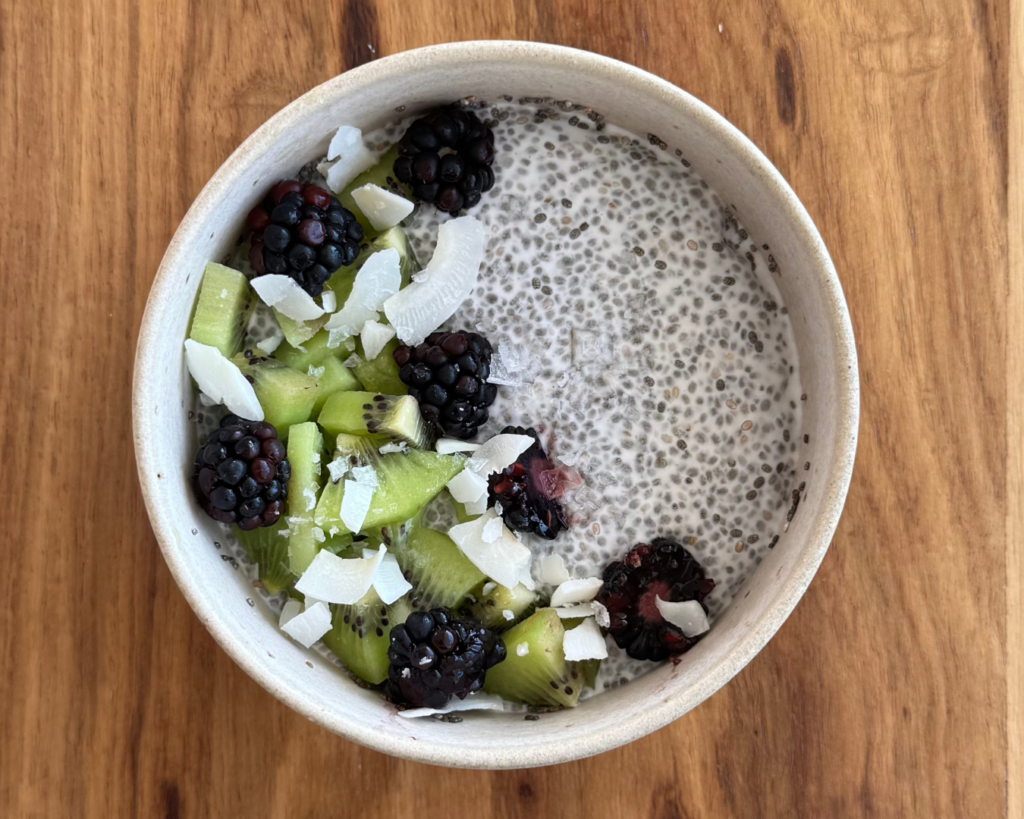
4 Easy Chia Seed Pudding Recipes for Meal Prep and Gut Health April 25, 2025 Simple, nourishing, and endlessly customizable. My easy chia seed pudding recipes are perfect for meal prep and support gut health with fiber and healthy fats. All variations are refreshing, with keep you satiated, and will satisfy your sweet tooth. Be sure to save these healthy breakfast ideas so you can continue to make them as part of your meal prep week after week! Not only are these great for breakfast, you can enjoy these any time of day for a fiber-packed snack or dessert. Classic Coconut Ingredients 1 (13.5 oz / 400 mL) can full-fat coconut milk1/4 – 1/3 cup water (to thin)2 tsp honey4 tbsp chia seedspinch of sea salt Suggested Toppings unsweetened coconut flakeskiwimangoblackberriespassion fruitsliced almondshemp seeds Refreshing Lemon Ingredients 1 (13.5 oz / 400 mL) can full-fat coconut milk1/4 – 1/3 cup lemon juice2 tsp honey4 tbsp chia seedszest of 1 lemonpinch of sea salt Suggested Toppings extra lemon zestchopped pistachiosstrawberriesblackberriesblueberriesculinary lavender Berry Vanilla Ingredients 13.5 oz / 400 mL milk of choice1/4 – 1/3 cup water (to thin)2 tsp honeysmashed mixed berries4 tbsp chia seedssplash of vanilla extractpinch of sea salt Suggested Toppings strawberriesraspberriesblackberriesblueberriesgoji berriesfresh mintfresh basil Chocolate Chai Ingredients 13.5 oz / 400 mL coconut or whole milk1/4 – 1/3 cup water (to thin)1 tsp cacao powder1/2 tsp cinnamonpinch of ground ginger pinch of ground cardamom2 tsp honey or maple syrup4 tbsp chia seedspinch of sea salt Suggested Toppings toasted almondstoasted cashewstoasted coconutcacao nibsfresh figs and now to bring it all together As you have noticed for all of these: the base is the same at 400mL (13.5 ounces) of liquid and 4 tablespoons of chia seeds. You may add a bit more liquid or a bit less chia if you’d like a thinner pudding consistency. The inverse for thicker. Combine all ingredients in a mixing bowl. Let sit on the counter for 10-15 minutes and mix again to break up any clumps that may have formed. Transfer into your food-safe meal prep containers (glass) and refrigerate. Let sit for at least 4 hours or better overnight.  Serve topped with the above suggestions or anything else you have on hand.  Why should you eat chia seeds in the first place? Check out this article from one of my favorite recipe websites, Downshiftology. Three questions I get asked: Should I eat this by itself for breakfast? You can do anything you want, but eating this alone depends on your goals. Chia pudding is high in fiber and healthy fats, but relatively low in protein. For a balanced, complete meal, pair it with another protein source (eggs, any meat, greek yogurt). How can I add protein? Mix in a scoop of your favorite protein powder or collagen. Mix in greek yogurt before eating. Adding nuts and seeds are a great additions for healthy fats and a little extra protein bump. How long will this last in my fridge? Chia pudding keeps well for 4–5 days. Make sure you store it in an airtight container or individual jars for grab-and-go convenience. Stir before serving or add a splash of water if it thickens too much. More Posts Like This No posts found!

Grain Free Granola Blog Post
Recipes

Easy Homemade Grain-Free Granola

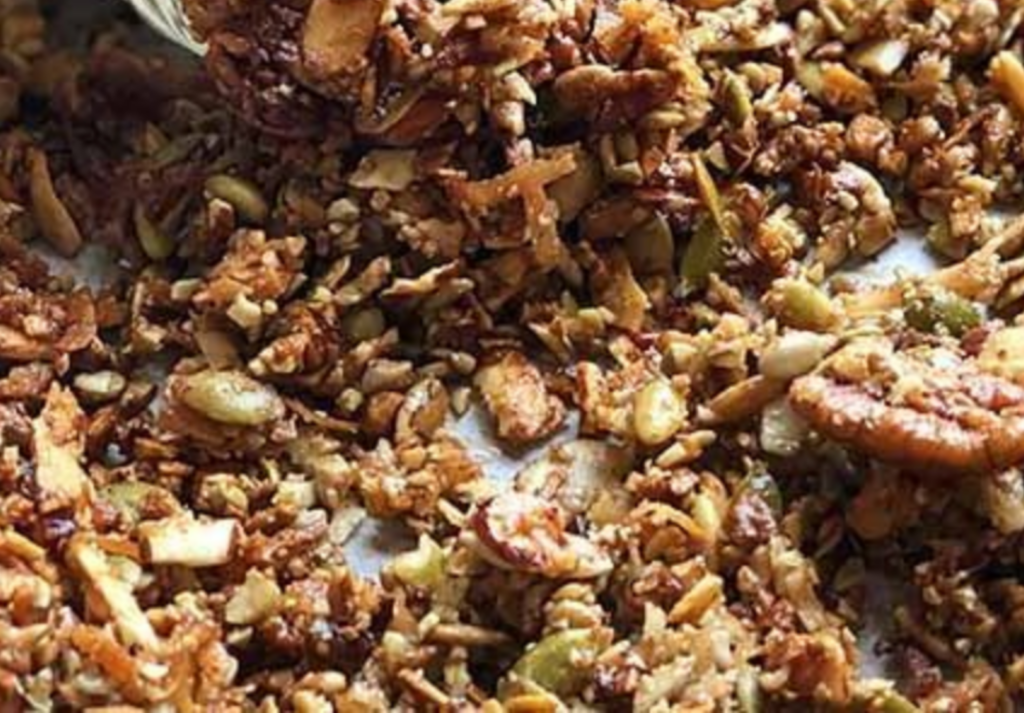
Easy Homemade Grain-Free Granola February 2, 2024 A perfectly sweet, crunchy grain-free granola loaded with nuts and seeds. This grain-free granola recipe is one of my OG recipes, back from when The Paleo Diet was all the rage. I believe I originally wrote this in 2013 or 2014, and it has since evolved. There are so many gluten-free and grain-free granola options out there now (Trader Joe’s has one that I particularly enjoy), but there’s just something about homemade that is always… better. If you’re looking for a simple and healthy breakfast option, this is a perfect choice. It’s healthy, naturally gluten-free, and easy to customize with your favorite nuts and seeds. Before we get to the grain-free granola recipe, a few notes: You may swap in or out any nut that you would like, or add more than the ones I have listed, as long as your total nut amount is 3 cups. Raw, unfiltered honey and virgin, cold-pressed coconut oil are my preferences when I state honey and coconut oil, though any type of honey will do. The dried fruit mixed in at the end is optional, and does not have a measurement. Eyeball it, but know more dried fruit will make it sweeter and more chewy versus crunchy. I typically use a small amount apricots, raisins, and craisins. Lisa’s Homemade Grain-Free Granola Ingredients 1/2 cup sunflower seeds1/2 cup pepitas1/2 cup pumpkin seeds1/2 cup almond meal1/4 cup coarse flaxseed meal1 cup almonds, chopped1 cup pecans, chopped1 cup walnuts, chopped   1 1/2 cups unsweetened coconut flakesfew dashes cinnamon 1/2 cup raw, unfiltered honey4 tbsp coconut oil1 tbsp maple syrup1 tsp vanilla extractdried fruit of choice Directions 1. Preheat oven to 325 degrees. 2. Combine all dry ingredients [nuts, seeds, coconut, cinnamon] into a large bowl. 3. Warm a saucepan over medium-low heat. 4. Add honey, coconut oil, maple syrup, and vanilla extract. Gently warm until runny and combined. 5. Pour wet mixture over dry ingredients and mix until well-combined. 6. Place parchment paper on baking sheet and spread granola in a thin layer. Don’t pack it down or together. Leave some of it in clumps and allow some air pockets to form. Bake for 20 minutes. 7. Remove from oven, stir granola and continue to bake until golden brown, 15-20 more minutes. 8. Let cool to room temperature and mix in dried fruit, if desired. 9. Store in an air-tight container for up to one week. Whether you eat it with yogurt, milk, or on its own because it’s that good, this grain-free granola recipe will quickly become a staple in your meal prep routine. More Posts Like This No posts found!

Scroll to Top